
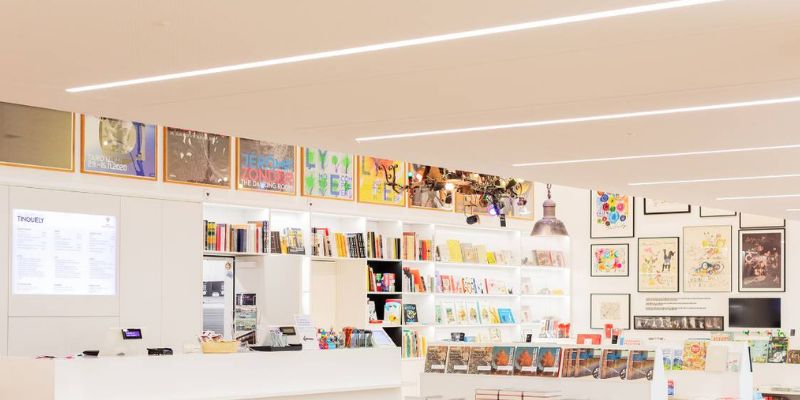
The museum shop: more than a souvenir, a cultural act
Why the shop has become the final strategic space museums must take seriously
Imagine leaving a museum visit and feeling a strong urge — not a vague idea, but a real impulse — to buy something at the shop. It is not the price or the originality of the product that triggers this act. It is the story the museum has just told you. The museum shop is no longer a mere commercial appendix. It has become the emotional thermometer of the entire cultural experience.
I. From side room to the heart of the visitor journey
The first real book-and-gift shops appeared in major European museums in the 1980s, driven by the big renovation projects at the Louvre and the Musée d’Orsay in Paris. Long relegated to a secondary role, they are now fully integrated into the visitor journey — often becoming the last space people go through before leaving, and paradoxically one of the most memorable.
The American Alliance of Museums now calls these spaces the institution’s “front-line ambassadors”. Their role is threefold: generate income, spread the museum brand, and extend the cultural experience beyond the walls.
The numbers speak for themselves:
- More than 60% of visitors buy a souvenir before leaving the museum
- Shops account for between 4 and 25% of total revenue in many US museums
- France’s Réunion des Musées Nationaux (RMN) generated €52.7 million in merchandise sales in 2017, up 10% year-on-year
- The MoMA Design Store in New York posts around $44 million in annual revenue
- At the Museo del Prado, the commercial subsidiary has recorded over €5 million in revenue in a single year
- The Guggenheim Bilbao shop generates around 10% of the museum’s total income
In many European institutions, the shop can represent up to 15% of total revenue. That figure alone shows how deeply this space has changed.
II. The shop as an emotional extension
What sets a great museum shop apart from a simple retail corner is storytelling. Visitors do not retain technical data; they remember how an artwork made them feel. The shop has to build on that emotion.
“The best museum shops create immersive experiences that connect seamlessly with the exhibitions. The product doesn’t sell an object — it sells a fragment of the story the visitor has just lived.”
— Mission Retail Consultancy Group
In practice, this means:
- Products organised by theme or exhibition, directly linked to what visitors saw in the galleries
- Objects with a clear origin story — a collaboration with an artist, or a direct link to a collection piece
- Shop spaces that visually extend the look and feel of the museum
- Narrative signage: “Inspired by our exhibition on…”
As one cultural retail director puts it, a museum shop has become “a destination in its own right, capable of generating impulse moments even independently of the visit itself.”
III. Benchmark museum shops around the world
🔴 Museo del Prado — Madrid, Spain
Probably the best-known shop in Spain. It sells over 300,000 postcards a year and its Official Guide, published in 10 languages, has reached 450,000 copies. In 2020, the Prado became the first Spanish museum to launch an official shop on Amazon.es, with around 600 products ranging from accessories and T-shirts to reproductions and homeware. Its 100% organic GOTS-certified cotton T-shirts, made in Portugal, are flagship items.
⚫ Museo Reina Sofía — Madrid, Spain
El Reina Shop, managed by Palacios & Museos, operates two physical spaces plus an online store. It specialises in objects related to the museum’s collections and to contemporary art in general, with a strong focus on quality, design, and exclusivity.
🟡 Museo Thyssen-Bornemisza — Madrid, Spain
Often cited as one of Europe’s most innovative museum shops, and accessible without a museum ticket. It regularly collaborates with students at IED Madrid to create exclusive items. The catalogue ranges from €1 gifts to €9,000 pieces: glassware from the Royal Glass Factory of La Granja, ceramics inspired by Degas, textiles by local designers, and collaborations with brands like Lladró, Swatch, and Loreak Mendian.
🟠 Guggenheim Bilbao — Bilbao, Spain
The Guggenheim Store, opened together with the museum in 1997, is a reference in both local and international design and craft. It champions emerging Basque creators and refreshes its offer with every temporary exhibition. Around 10% of the museum’s income comes from the shop; the average basket is about €20, with roughly 60% of buyers coming from abroad. The T-shirt featuring Frank Gehry’s logo design has become a cult item.
🔵 Picasso Museum — Barcelona, Spain
Located in the Gothic Quarter, the shop offers one of the most comprehensive selections dedicated to the Malaga-born artist: art books, prints, garments, and design objects. It is particularly popular with international visitors to the city.
🟢 MNAC – Museu Nacional d’Art de Catalunya — Barcelona, Spain
The MNAC shop in the Palau Nacional on Montjuïc balances the promotion of Catalan and Spanish heritage with a tightly curated selection of contemporary design. The space reflects the monumental setting that houses it.
⚪ Cristóbal Balenciaga Museoa — Getaria, Spain
A global reference in fashion, built in the couturier’s home town. Its shop extends the haute couture experience with products curated in line with the museum’s scenography. Many visitors combine the museum, the coastal landscape, and local gastronomy in a full-day experience.
🟤 Centro Botín — Santander, Spain
This arts centre, designed by Renzo Piano and projecting over the Bay of Santander, includes a retail area on its glazed ground floor. The shop stocks products inspired by the building’s architecture — a coherent aesthetic choice that turns even a souvenir into a piece of design.
🗽 MoMA Design Store — New York, USA
The global benchmark, with around $44M in annual revenue. Collaborations with Uniqlo have redefined the border between fashion and culture. The store has become a shopping destination in its own right, independent of museum entry.
🌿 Louisiana Museum of Modern Art — Copenhagen, Denmark
Named the world’s best museum shop in 2016. It offers high-end Scandinavian design, on-trend ceramics, and furniture in collaboration with brands like Ferm LIVING — an offer that clearly goes beyond standard tourist souvenirs.
IV. Textiles: when visitors want to wear the museum
Among all museum shop products, textiles have a special place. Wearing a MoMA T-shirt in New York, a Tate tote bag in London or a Prado hoodie in Madrid means extending cultural belonging into everyday life. This is what consumer sociologists call an “identity souvenir”: the object becomes a carrier of both personal and collective stories.
This makes textiles the hero product of successful museum shops:
- Accessible price point — they reach a broad audience from just a few euros
- High visibility in daily life — every use is organic marketing for the museum
- Easy to adapt to temporary exhibitions — collections can be refreshed quickly and at low cost
- Highly “shareable” on social media — crucial for engaging younger audiences
- Compatible with sustainability — organic cotton, recycled fibres and responsible production are increasingly expected
Sabetrend, a specialist in custom textile printing for museums and cultural institutions, helps organisations create collections aligned with their visual identity — T-shirts, tote bags, polos, and hoodies — turning the shop into a strong, coherent extension of the museum’s brand.
V. Trends shaping the museum shop of tomorrow
1. E-commerce as a borderless amplifier
MoMA Design Store regularly features in “best holiday gift” lists online, even for people who have never visited the museum. The Prado launched its Amazon.es store in 2020. The shop becomes an ambassador for the museum brand, accessible from anywhere in the world.
2. Exclusive collaborations with artists and designers
The Thyssen works with IED Madrid to co-create unique products; the Guggenheim Bilbao collaborates with emerging Basque makers. These partnerships generate exclusivity, support the local creative economy, and reinforce the museum’s narrative.
3. Sustainability as the new baseline
Museums, as institutions of preservation and transmission, are increasingly expected to take a stand on the sustainability of their products: recycled materials, local production, and responsible packaging. Sustainability is no longer a trend — it is a visitor expectation.
4. The shop as a standalone destination
Museums such as the Thyssen and the Guggenheim allow public access to their shops without a ticket. The shop becomes an independent touchpoint for the cultural brand, attracting customers who may not yet have visited the galleries.
5. Immersive scenography enters retail
The shop borrows the codes of the exhibition spaces: directional lighting, narrative furnishings, tactile installations. From simple sales areas, these spaces are evolving into full-fledged, carefully staged experiences.
Conclusion: the ultimate test of the museum experience
If you truly want to assess the quality of the experience you offer your visitors, do not start with satisfaction surveys. Start with the shop. Watch what people do there.
Museums that succeed with their shops have understood a simple truth: you are not selling an object, you are selling the continuation of an emotion. And if the best indicator of satisfaction is a T-shirt proudly worn months after the visit, then the shop really is the most strategic final space a cultural institution can design.
“The shop is not the end of the visit. It is the last gallery of the museum.”

